StatCounter

Showing posts with label sheep. Show all posts

Tuesday, July 14, 2015

Lamb Chopper

First let me clear up some terminology, because I wondered about the name of this cheese. A lamb is a young sheep that usually hasn't produced offspring. Once the lamb reaches a year old, it can then be called a sheep. Ewes are female sheep and lambs, though a young one is often more specifically called a ewe lamb. A ram is an adult male sheep, and a ram lamb is a young male sheep. But Lamb Chopper is an adorable name and sounds much better than Sheep Sliver, Shard, Slice..Specimen? Eww. No, that last one sounds really bad. Yes, the name Lamb Chopper is much better, even though it may not be technically correct.

What ewe looking at?


Lamb Chopper is a tangy but mild sheep milk cheese made by one of my favorite cheese companies, Cypress Grove. Truffle Tremor is another outstanding cheese the company produces. The Chopper is actually produced in Holland but under the direction of Cypress Grove's renowned cheese maker, Mary Keehn.

It's classified as a Gouda, but the Lamb Chopper tastes like a mixture of several types of cheeses. Similar to a Gouda, it is encased in a wax rind. This is one of those cheeses that's on the verge of being sharp, reminiscent of some hard Italian cheeses, but with a much softer but still rich flavor. It bites, but not too hard, and some lovely sweet, nutty and citrus notes can be detected after the initial tang drifts to the background. A touch of saltiness rounds out the complex flavors of this cheese that is aged 3-6 months.

The overall texture of this beautiful, milky white cheese is hard and dry with a bit of oiliness to it. For a hard cheese, it yields well to the teeth and has a soft quality to it. Vegetarians rejoice, because it's made with a vegetarian rennet.


Cypress Grove Lamb Chopper

As you can imagine, the Lamb Chopper is a great cheese for any sandwich, cold or hot. It's versatile because it's mild, but it has enough complexity to elevate any dish. Try is on a grilled cheese sandwich, with crusty bread and chutney, in pasta dishes or plain with fruit and a glass of Vouvray.


Monday, May 4, 2015

La Tur

A while ago, when I visited Cheese Importers in Longmont, Colorado, my mission was to find an unusual cheese to take home and review. After much searching, I happened upon an adorable little treasure.

La Tur has a wrinkly top rind with an oozing interior just bellow the surface.

It looks like a fancy cupcake!

La Tur is a creamy soft cheese from the Piedmonte region in Italy. It looks like a frosted white cupcake and is almost as much fun to eat. Stuffed inside a plastic container with a cupcake liner, La Tur is unique, unexpectedly elegant and complex. Three kinds of milk are used to create this intriguing cheese: cow, goat and sheep. This milky menage a trois is heated at the lowest possible temperature allowed by Italian law, so that naturally-occurring enzymes aren't completely destroyed. This ends up allowing the flavor of the final product to become more complex.   

After popping open the lid of the container, an inviting aroma with just a hint of pungency escaped. I couldn't wait to dig in! As the cheese ages, the edges ooze more, and it becomes more pungent both in aroma and in flavor. Stored properly, the entire cheese gets softer and gooier over time.

La Tur's thin and fragile white rind is wrinkly and slightly fuzzy with a mildly mushroomy taste. The younger it is, the more the texture in the middle is flaky and less moist but not quite dry. The milky white interior coats the palate in a more gentle way than a fresh goat cheese, but there are some similarities. As soft as it is overall, La Tur still has substantial structure and texture, however, this is a cheese that invites you to grab a spoon and dive into the center.

La Tur Cheese
Fluffy, oozing, velvety smooth La Tur cheese on a plate.


In terms of flavor, the cow milk softens the tang of the goat milk and subdues the sharpness of the sheep milk, leaving the overall taste on the verge of something big without hitting any shocking notes. It's a nice balance of flavors and textures that leaves you wanting more.

In the early stages, I tried some on an almond, orange biscotti and accidentally created a masterpiece. Big cream and milky flavors in this cheese pair beautifully with a slightly sweet cookie, and the subtle tang is just enough to wake up your taste buds. The velvety smooth cheese practically melts in your mouth, so anything with a nice crunch makes a good accompaniment. Any slightly sweet cracker makes a great combination, but this cheese also pairs well with crusty bread, grilled fruits, quince jam or honey. Serve it with a fruit platter that includes berries or even bake it in savory dishes. Because of its subtle flavors, La Tur ends up being a versatile cheese.

La Tur with a crunchy cracker.


Try La Tur with Mondoro Sparkling Asti Spumante, a low-oak red wine or a Sauvignon Blanc.

Image result for Mondoro Sparkling Asti Spumante
La Tur pairs well with Asti Spumante.


Friday, October 24, 2014

Raw Milk Manchego, DOP Mitica One Year

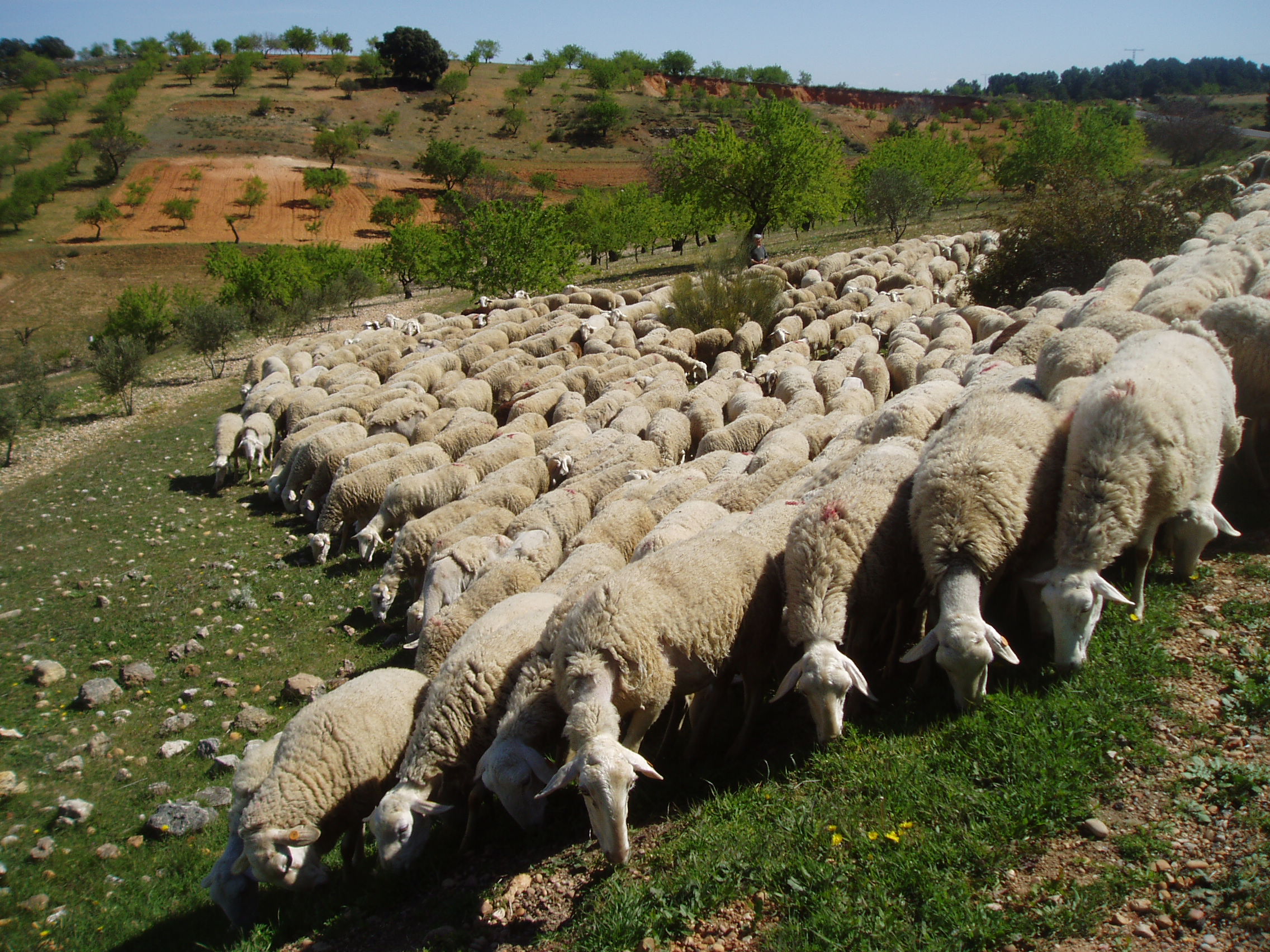
Sheep grazing in La Mancha, Spain. 
Manchago is a dairy delicacy that dates back to the early 17th century and is one of Spain's most popular cheeses. 

Raw milk Manchego is far more outstanding in taste but harder to find than pasteurized versions, even where it's made in Spain but especially in the United States where increased restrictions on importing raw milk cheeses have been put into place. Since Manchego is typically aged at least 60 days, it's one of the raw milk cheeses that's accepted as safe to import by the FDA. Still, raw milk cheeses are generally harder to make and require more attention to detail, so many cheese makers are turning to pasteurized milk. Fortunately, a few master cheese producers take the extra time to create Manchego made from raw milk. They and their clients will be happy to know that the extra effort is worth it when it comes to the more pronounced flavors that emerge in their products. 


rawmilk
Raw sheeps's milk contains folate, B12 and other nutrients.

Like many cheeses with a long history, there are strict rules about how and where Manchego is produced. In order to be classified as Manchego, the cheese must be made from whole milk that comes from the Manchega sheep. These sheep are raised and bred on registered farms in designated areas. Cheese makers must also entirely produce their product in the La Mancha region of Spain. This includes the provinces of Albacete, Ciudad Real, Cuenca and Toledo. The cheese must be aged a minimum of 60 days but not more than two years, and it must be pressed into cylindrical molds that are no more than 12 cm high and 22 cm in diameter. In the past, Manchego cheeses were wrapped in grass baskets, creating zig-zag lines on the aging rind, but these days those lines can be and often are made by machine. 

Inside the inedible wax rind, Manchego has a powerful aroma, but it's not like traditional stinky cheeses. The potent smell is sharp, but not offensive. If anything, it's inviting despite coming on strong. Think more an exuberant Trent Lane over Pepe Le Pew. It's intriguing but laid back and unassuming. This raw-milk version is aged one year, which allows the color of the interior to deepen to a light caramel color. On the outside, it looks a lot like many other Manchego cheeses, but don't let its common appearance fool you.


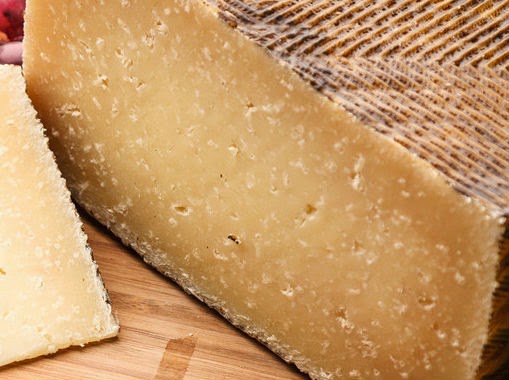
Raw milk manchego aged for a year has a beautiful caramel color.


Even if you are not a Manchego fan, be sure to try this one that's produced in the Cuenca region by Estanislao, a cheese maker whose family has been producing raw milk varieties for over half a century. While most Manchego cheeses are nice, this one stands out among the rest, mostly because the use of the raw milk enhances the flavors tremendously. 

When first tasting this beautiful cheese, be prepared, because your eyebrows might unexpectedly rise, and you might feel compelled to exclaim, "Ooooo!" out loud. Raw milk Manchego wakes up all your senses. 

While the flavor is very even and far from complex, it's also fruity, tangy, piquant and outrageously nutty with notes of mixed nuts roasted with brown butter. This cheese is dry, salty and very slightly acrid but oddly has an occasional sweet flavor that comes out of hiding. There's no doubt that this cheese packs a punch. It has a classic sheep's milk cheese taste that's not as pungent as goat's milk but stronger than cow's milk. If you let it linger in your mouth and concentrate, you will detect mild notes of hay and grass. Because it's not overly complex, it makes a great snacking cheese, even though both the flavor and aroma are strong. It has a high fat content which always seems like an odd paradox to me when it comes to harder cheeses. The oiliness doesn't come off as creaminess, though. It's more crumbly. 

Manchego is not a melting cheese, so it's not ideal as the main cheese on pizza, and it's a bit too dry and salty for a cheese sandwich. Keep in mind too that the flavors are more pronounced with this raw milk cheese, so mixing it with other cheeses will elevate the overall flavor of whatever you prepare. Serve raw milk Manchego with quince paste or fig jam and crackers. Try it with dates, olives, almonds or melons wrapped in pancetta. It even goes well with a salad served next to a lamb dish. 


Manchego on toasts with ham, fig jam and radish sprouts.

Liquor Mart
Liquor Mart in Boulder has an outstanding selection of wines, beer, champagne and more.


Kevin Downs, Assistant wine manager at Liquor Mart in Boulder, Colorado, suggests the following pairings for this cheese:


Raw Milk Manchego

Although people often think of red wine with cheese, white wine actually goes better with most cheeses, especially with soft or creamy varieties. However aged, firm cheeses often pair well with reds, and Manchego is a perfect example. The nutty, piquant flavor calls for a tannic, somewhat fruity red. Not surprisingly, since this is a cheese of Spanish origin, an ideal choice is Tempranillo. Tempranillo is the main grape found in Rioja and Ribera del Duero wines. These wines have red cherry fruit flavors with moderate tannins, and spice and vanilla from oak aging. There is also an earthiness to these wines that works well with the cheese. From Rioja, Valsacro Dioro 2005 is a spectacular choice, at $29.99, and if you want to spend less, Arnegui Crianza at $12.99 is basically a steal at this price. 

Ribera del Duoro is the other major region producing wines from this grape, and these tend to be bigger, more fruity wines. Vizcarra Senda del Oro is superb at $18.49. Other varietals that work here are Cabernet Sauvignon or Meritage wines from California that have the structure of Bordeaux but a bit more fruit. Marietta Cellars Arme, at $24.99 is an outstanding Meritage, as is My Essential Red, by Master Sommelier Richard Betts for the same price. Lyeth, at $14.99, is a good choice as well. For a Cabernet, try Wyatt or Rickshaw both under $15.00. 

If you are a white wine drinker, a nice Verdejo works well. This varietal produces fruity, minerally medium-bodied wines that work well with this cheese. Shaya, at $17.99, is outstanding, and for $10.99 both Naia and Basa are more than adequate. 

Finally, again sticking with a Spanish theme, an Oloroso sherry, with its caramel, baking spice and nutty flavor would be outrageous with this chese. Try Bodegas Dios Baco, at $24.99 Enjoy!


Oloroso sherry pairs well with raw milk manchego.