StatCounter

Showing posts with label Vermont Creamery. Show all posts

Tuesday, April 21, 2026

Cremont

I've sampled a lot of cheese in my life, but only a few times have I felt the urge to immediately run outside and tell the first person I saw how good it is after just one bite. The only thing preventing me from doing so after sampling Cremont was my fear of scaring a stranger who might not appreciate cheese the way I do.

 Instead, I might have to resort to using a lot of exclamation points in my review here in order to convey my enthusiasm. (Just kidding, that’s a pet peeve of mine.*) 

Cremont is another winner from Vermont Creamery

Since I have mentioned Vermont Creamery multiple times, I’ll skip going into detail about how good this company is overall. There's a reason why they have won multiple awards for their cheese and their business practices. You can check out their website at the link above.

Cremont is a cow and goat milk soft-ripened cheese with an extraordinary texture. Inside the pretty criss-cross-patterned, tender rind is a paste so soft it's almost squishy. It's velvety beyond belief and absolutely melts in your mouth while still having a decent mouthfeel. Even the color is unique, off-white with a fluffy snow-colored interior.   


Cremont has a beautiful exterior

The name Cremont is meant to convey "the cream of Vermont," because this cheese is made with a mixture of cow's milk, goat's milk, and a bit of lovely Vermont cream. The addition of cow's milk and cream tempers the wild goat flavor, leaving the taste less unruly, tangy and tart but not overwhelmingly sharp. The taste is so intriguing, it's almost addictive and leaves a yearning for more. 

Despite the mild flavor, it's extremely complex. There are notes of nuts, cream, butter, and mushrooms. It's just so perfectly balanced, like sunshine on a cheese board with a tiny hint, just the right amount, of funk. Cremont is sophisticated and luxurious, but with the possibility of something a little naughty hiding under the beautiful surface. It could be the cheese version of Princess Margaret. 

I’m not stretching the truth when I say it’s one of the best cheeses I have had in a long time. 


This is a cheese worth cheering about

In terms of pairing the exquisite Cremont, the mild flavor goes well on a cheese board with dried figs, red grapes, honey, sliced pears, oatcakes, sourdough crackers, country ham, and caramelized pecans. Try it on the side of an herb salad with crusty French bread, or on the side of a bowl of tomato soup with some toasted sliced bread. It even goes well served with sliced roasted root vegetables. Cremont pairs nicely with sweeter offerings as well. Some good-quality milk or semi-sweet chocolate and hazelnut crackers with Cremont make an excellent after-dinner treat. 

For beverages, this little number goes well with Chardonnay, Chenin Blanc, Viognier, Syrah, Vinho Verde, Cabernet Sauvignon, Champagne, Cremant d'Alsace, or a fruity cocktail. As far as beer goes, try Cremont with a Belgian Golden Ale, Blue Moon Belgian White, an IPA, or a dry sparkling cider. 

Try Cremont with sparkling wines


* I once wrote an article for an online publication about pairing stinky cheese with foods and beverages. After I wrote the article, I didn’t check it post submission. Many, many years later, I was doing some research on a specific stinky cheese and stumbled upon an article. When I first read it, it sounded familiar, but there were so many exclamation points, it turned me off. When I looked at the author, I was surprised to see my name. It turns out the editors had done quite a number on my original piece! Embarrassing!!!

Wednesday, February 25, 2026

St. Albans - Complete with Ceramic Ramekin

I'm very much in love with Vermont Cremery's cheeses lately. Their selections aren't over-the-top or in-your-face, but they are well-made, excellent and dreamy. I'd make hearts around the company name on my notebook if I were still in school, and if that were still a thing.  💗


Since I recently reviewed several Vermont Creamery cheeses, I won't go into detail about the company again, except to remind readers that the founders have done an excellent job of creating award-winning cheeses and promoting sustainability. You can read more about them at the following link: Vermont Creamery

St. Albans is a curious little cow’s milk cheese that comes in its own ceramic ramekin. This is another one that I started to review long ago, but I kept drifting off into fits of pleasure while eating the cheese rather than sampling it for blog content. It's easy to do when the product is inviting and heavenly. Part of the reason I had to buy this one several times before writing what follows is because St. Albans is yummy and small, making it easy to get carried away. Before you know it, POOF, it's gone...again. Whoops. 

St Albans comes in a cute ramekin


The container St. Albans sits in prevents a bottom rind from forming. Also, the ramekin can be used to bake (or microwave) the cheese. The discs are so darn cute, too. Both the cheese itself and the ramekin are petite, just perfect for one. I kept the vessel and plan to use it again, possibly to bake some kind of mini snack. 

St Albans has a delicate white surface rind that's on the verge of wrinkly and could almost be described as lacy. It looks more like a light dusting of powdered sugar on a pastry than an actual rind; however, this surface adds a rich flavor to the overall product.


There is no bottom rind 


This delicate little bloomy-rind cheese is an American version of St. Marcellin, a beautiful cheese from the Rhone-Alps region in France. Despite St. Albans fragile appearance, it packs a flavor punch that's sure to please your taste buds. 

The most obvious characteristic of St. Albans is the fluffy, smooth texture. My goodness, is this cheese creamy. It's light and airy, almost like a soufflé but smooth and without the egg texture, of course. It’s much gooier and oozes once it's cut open. The flavor can verge on sour but is light and tangy with just a hint of mushroom. 

It's so gooey...yum.


The ramekin provides a nice way to create savory dips. Bake the little pot in a hot oven for about 10 - 15 minutes and serve hot with roasted herbed potato sticks, lightly steamed asparagus, crusty bread, or crackers. Top the baked dish with jam, tomato compote, or apple butter. I actually preferred the flavor and texture of the unbaked cheese. It can be served at room temperature with red grapes, sourdough crackers and truffle honey, thin rye crisps, dried apricots, toasted walnuts, or saucisson sec. 

The cheese can also be added to hot dishes. Place a bit on pepper steak, or add some to a potato casserole. Though it’s an aged cheese, its light flavor pairs well with a variety of foods. I prefer it on crackers or bread, pure and unadulterated. Heck, it's so good you can simply spoon it straight into your mouth, no accompaniments needed. 

Melted or at room temperature, this cheese is great.

As for beverages, pair St. Alban’s with Chardonnay, Viognier, Pinot Gris, Amarone Della Valpolicella, a fun Champagne or Champagne cocktail, or a tawny port. If beer is more to your liking, try St. Albans with a Trappist beer, a golden ale, or a light lager. Mostly, though, enjoy. This is a cheese that should transport you to a lovely, warm hillside on a beautiful, spring day and make you forget, even for a moment, any strife in the world. 
Try Champagne or a Champagne cocktail with St. Albans - Original photo by Steve Daniel


Thursday, October 9, 2025

Hooper, You Elegant Little Stinker

What a beautiful cheese this is.

It has been a while since I've splurged and purchased extravagant cheese online. When I'm buying cheese to sample for this blog or in general, I try to keep my spending limit under a certain amount, which isn't easy when my eye is automatically drawn to the more expensive varieties. After my last escapade, though, I felt I deserved a special treat. 

I've sampled cheese from Vermont Creamery before and haven't ever been disappointed, quite the opposite, in fact. The award-winning company produces some of the finest cheeses in the world, and that's not an exaggeration. 

Since I've already gone a little bit into the history of Vermont Creamery in past posts, I’ll just add that the cheese and other products the company produces aren’t the only extraordinary aspects of this operation. The founders and everyone involved do an incredible job of promoting sustainability while focusing on producing extraordinary products. In sharp contrast to Kraft Foods, Vermont Creamery is certified as a B Corp, which means the company meets the highest standards when it comes to social and environmental performance, public transparency, and legal accountability. It does good things.

Hooper is a cute shape


When I first saw an image of Hooper, there was no way I could resist it. It was exactly what I was looking for in a cheese to review. It checked all the boxes by 1. Being something I had never seen or heard of before. 2. having an appealing shape. It looks like a prim little doughnut. And 3. It's a wash-rind variety. Swoon! Sure, it was a little over my usual spending limit, but I had a good feeling this was going to be a grand adventure. After taking a deep breath and bravely pressing the purchase button, I waited impatiently for the package to arrive. 

And, boy, was this little stinker worth the price, the wait, and the effort it took to find. It is one of the best cheeses I have had in a very, very long time.

Hooper is named after Vermont Creamery's co-founder, Allison Hooper, who learned cheesemaking during a year abroad in France back in the 1980s. She and Bob Reese founded the company in 1984, and they have been producing wonderful dairy products ever since.

This lovely ring of cheese has a classic wash-rind, stinky aroma that’s not overpowering. It smells like a day at a well-maintained petting zoo, less pungent than some of its heavy-hitting relatives that have odors veering into unkempt barnyard territory. Hooper also looks pretty with wrinkly, snow-white, upright sides and the colors of a soft orange sunset sitting delicately on top. The wrinkly white exterior comes from the use of Geotrichum mold in the aging process. 

Hooper has a wonderfully textured exterior

As far as flavor, the cheese is perfectly balanced. It's somehow subtle but incredibly memorable, so much so that after the last bite disappeared, I found myself craving more, even days later. 

The combination of cow and goat milk with a dash of cream softens the sharpest notes and brings about an even taste that's intriguing and potent but not overwhelming. There's a beautiful tang with slightly sweet undertones. It's not overly nutty or earthy, though there are hints of both flavors. It's lighter than one would expect, smooth, velvety, and creamy with just the right amount of salt. Take one bite and let the flavors dance on your tongue. 

Under the slightly pliable rind sits a wonderful creamline that's oozy and smooth, and the inner section has a texture that's similar to fresh goat cheese, firmer and denser than the outermost layer. The overall mouthfeel is creamy, very creamy, though. 

Look at the lovely cream line 

There are layers to this cheese

It's an elevated wash-rind cheese that's sophisticated and beautiful, the Rolls-Royce of wash-rind cheeses. 

Pair this standout vegetarian product with a crusty French baguette or sourdough crackers. You can also place Hooper center stage on a cheese board along with dried apricots, fresh cherries, cornichons, Prosciutto or ham, and roasted pecans. Add slices of Hooper to green salads or tacos. It adds flavor to baked dishes, too, even though you’ll miss out on the beautiful texture in its natural state.

As far as beverages, try Hooper with Chardonnay, Rose, Sauvignon Blanc, Albarino, Gamay, Dolcetto D’Alba, or Chenin Blanc. If beer is more your style, go with a pale ale or Saison. Mostly, just enjoy this cheese. It can stand on its own just fine, but it's also versatile for a wash-rind variety and pairs well with more than you might expect. 


Serve Hooper with a crisp Rose

Thursday, February 18, 2021

Bijou

Bijou
Bijou goat milk cheese is quite cute.

Some time ago, I reviewed an interesting cheese from Vermont Creamery called Bonne Bouche, an aged goat's milk cheese with ash on its surface. In sharp contrast to the intimidating look of a deeply wrinkly cheese covered in black soot that accentuates the crevasses, Bijou is an angelic petit white button that's sold in pairs, two perfect twins sitting side-by-side nestled in a small carton. It's only with an up-close viewing that the small wrinkles on the surface of this cheese are apparent. From afar, the fromage is inviting, pretty even. It's not surprising that a cheese this good-looking was born in the beautiful state of Vermont. 

Here in Colorado with over 50 mountains exceeding 14,000 feet, we look at 4,000-foot formations, as beautiful as they are, more as hills than mountains, but Vermont Creamery sits in what's called the Green Mountains, which really are green or look so, even in the winter. Founded in 1984 by Allison Hooper and Bob Reese, the creamery became B Corp certified in 2014. Not only is it considered one of the best places to work in the state, voted by Vermont Business Magazine, it supports family farms in the area and promotes sustainability.  The company has won over 100 awards for its cheese-making skills, and in 2019, Bijou took top honors at the American Cheese Society Competition where Vermont Creamery took home a total of six awards. 

 From their website:

Allison learned how to make cheese during an internship on a farm in Brittany, France. Bob was working for the Vermont Department of Agriculture and charged with organizing a dinner featuring all Vermont-made products. When a French chef requested fresh goat cheese, Bob scrambled to find a local producer. He asked Allison, who was working in a dairy lab and milking goats in Brookfield, to make the cheese. The dinner was a success and the cheese was a hit; Vermont Creamery was born that night.

In the 34 years since the improbable business partners made their first goat cheese, a lot has changed. But the more things change at Vermont Creamery, the more they stay the same.

We’re still here in Vermont, making consciously-crafted, delicious dairy that reflects who we are and what we care about; we’ve taken the time to perfect every detail of what we make. Our cheeses and butter have won hundreds of national and international awards, our team remains our most valuable resource, and we still put taste above all. You’ll never eat anything we don’t believe in.

Bijou
The surface of Bijou is wrinkly.


Bijou means "jewel" in French but has come to mean "small and elegant" in English. Each two-ounce button is made using fresh pasteurized goat's milk and microbial rennet. Once the curds have separated from the whey, they are ladled by hand and allowed to coagulate and slowly drain overnight in cheesecloth, a traditional method of cheese making. This Crottin-style cheese is then aged. What so many reviews leave out regarding Bijou is that this is a Geotrichum-rinded cheese. The wrinkles that develop during the aging process are due to the addition of Geotrichum Candidum, which usually comes in a mold powder. Geotrichum is a genus of fungi that includes over 100 species, many of which I'm sure you would rather not hear about and should probably avoid. It was recently discovered that Geotrichum Candidum always clusters with yeasts, but when it comes to cheese, Geotrichum Candidum behaves more like a mold, producing lipases, enzymes that bind to fat globules and then break them down, releasing fatty acids. This reaction is what causes all the fun stuff to happen in cheese. It's associated with the aroma that people either love or hate, the interesting texture, and, of course, the taste of the cheese. Geotrichum-rinded cheeses are distinct because they have a wrinkly surface. 

Bijou


While this button of cheese is tres petit and doesn't give off any overly strong aromas, it packs a good flavor without knocking you out with the tang of the goat's milk. This soft-ripened cheese is mild with definite milky notes. Early in the aging process, it tastes sweet, very slightly nutty, yeasty, and tangy. Under the thin, wrinkly rind, the center is firm and has a pasty mouthfeel. As the product ages, the flavors intensify, and hints of hay and wild mushrooms emerge. There's a noticeable dash of salt that's not unpleasant. Overall, it's well balanced and intriguing. Past its prime, like most soft-ripened cheese, it will develop a slight ammonia flavor. 

It's very tempting to eat this cheese in one or two bites, but it's soft enough that it can be spread on a warm crusty baguette or served on Raincoast rosemary and pecan crackers. It's versatile enough to pair well with either sweet or savory accompaniments. Try it cut into wedges in a green salad or serve it on a cheese board with fresh fruits and roasted nuts. Though it takes away from the cuteness factor, it's a great cheese on grilled sandwiches and can be used in other baked dishes. A way to keep the cheese looking adorable is to bake it in a mini crust and serve it with cherry preserves or fig jam. 

Pair Bijou with Chardonnay, Viognier, Sangiovese, Syrah, Rose, Blanc de Blanc Champagne, Cabernet Franc, Chenin Blanc, or a not too sweet ruby Port. Vermont Creamery suggests an apple cider beer, which sounds perfect, but you can also try it with an IPA or wheat beer. 

Try Bijou with Cabernet Franc.


Thursday, March 26, 2015

Bonne Bouche

Image from their website: Allison and Bob, founders of Vermont Creamery.

With over 100 awards received, Vermont Creamery in Webstervill, Vermont has made its mark both nationally and internationally. Though Allison Hooper and Bob Reese started small, their business has grown to a recognizable force in the cheese-making world without losing its dedication to promoting quality and sustainability. Allison and Bob's success story all started with some delicious goat cheese, but today the company produces butter, aged and fresh cheeses produced from both cow and goat's milk, and creme fraiche. With a team of dedicated individuals, Vermont Creamery continues to amaze cheese lovers around the globe.


Many times I had seen Bonne Bouche sitting in the cheese case at Whole Foods Market. It's a cheese I knew I wanted to try, but it can be on the intimidating side. This interesting little pasteurized goat's milk product looks like a small creature from another planet: wrinkled, pale, slightly fuzzy and speckled with ash. Though geotrichum-rinded cheeses can sometimes look a little funky, they usually offer some rich flavors. Some cheeses inoculated with the geotrichum fungus include: Camembert, Saint-Marcellin, Saint-Nectaire, Reblochon and many French goat cheeses.

It's not alive, but it looks like a small alien.

Bonne Bouche is lightly sprinkled with ash. Today's ash is often not real ash but a mixture of powdered charcoal and salt. Whichever is used, the real ash or the charcoal mixture, the light coating is designed to protect the surface of the cheese, add color to wash and bloomy rinds and encourage the growth of the lovely bacteria that gives cheese a richer, more robust taste. It's true that as Bonne Bouche ages, the flavors become more pronounced and pungent. The surface also looks less tame the longer it's left unattended. 

At the suggestion of someone who claimed Bonne Bouche is her favorite cheese, I took the plunge and bought one of the small wheels that sits inside a miniature wooden crate.

Wow this cheese is salty. People talk about the similarities between Bonne Bouche and French cheeses made in the Loire Valley, but I don't think I have ever encountered such a salty-tasting French cheese. I don't want to deter people from trying this wild creation, but be prepared for a salt explosion that becomes oddly addicting after several tires. Once you get past the quick burst of sodium chloride, some intriguing flavors emerge.

The texture of this odd little dairy product is remarkable. The cheese just oozes out of its rind in pure liquid pleasure. Here's where you want to close your eyes, feel the velvety interior coat your tongue and experience the full complexity of the Bonne Bouche, which translates to "good bite" or "good mouthful" but really means anything that tastes really wonderful. The rich, gooey insides of this cheese certainly do. You will notice mushroomy, earthy notes and a slight piquant bite, just enough to make your taste buds pay attention. With age, the more sour, pungent flavors come out of hiding, but it's actually a mild cheese overall with just enough of a tang to remind you that it is a goat cheese.

Look at the beautiful white interior as it escapes the confines of the rind.

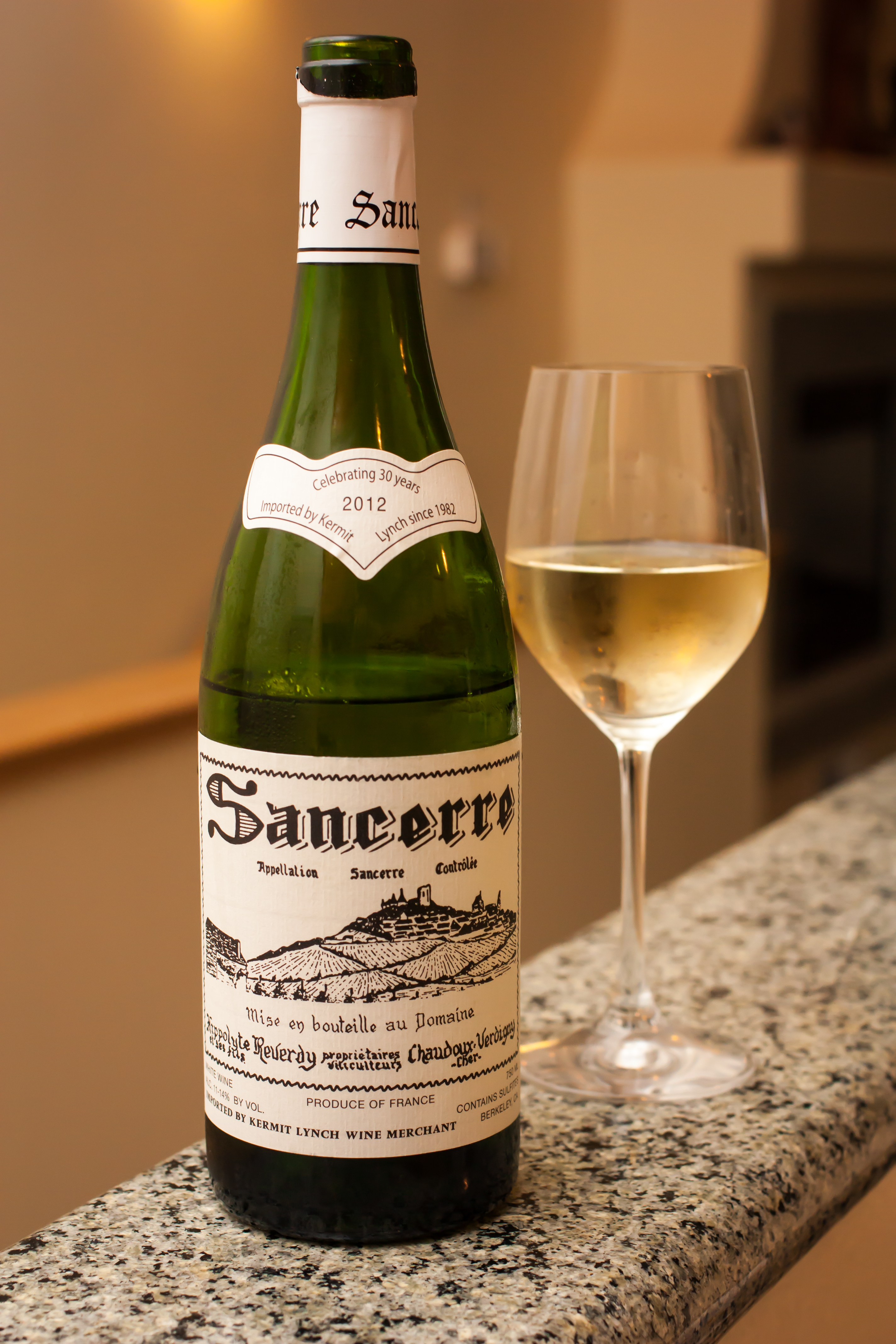
People often suggest pairing this cheese with honey or something sweet, but I found it too salty for that. I prefer it with a crisp green apple or with slices of avocado on rye crackers. As far as wine, try serving Bonne Bouche with a Sauvignon Blanc, Sancerre or a nice rose.

Sancerre pairs well with Bonne Bouche.