StatCounter

Showing posts with label raw milk. Show all posts

Wednesday, June 22, 2022

Thomasville Tomme

Thomasville Tomme cheese


I have to preface this blog post by saying any complaint I'm going to share has nothing to do with Thomasville Tomme cheese itself or the company that makes this lovely product. My criticisms are directed at the store where I purchased the cheese, and it's not the first time I have been disappointed by this large chain store. It may not be worth mentioning, though, other than to say that when a cheesemonger tries to sell you old moldy cheese and claims that's how the cheese is supposed to look, take a look at the cheese maker's website before you put down any cash and end up with something well past its prime. More often than not, you will find a description of how the cheese is supposed to look, smell, and taste, and while mold occurring on cheese usually isn't anything too terrible, in this case, Thomasville Tomme isn't supposed to have it. In fact, Sweet Grass Dairy suggests cutting away any mold that happens to develop after the cheese is exposed to oxygen, so if anyone tells you that the mold on this particular type of cheese is not just acceptable but desirable and intended, don't trust her. 

Cut away any mold that develops.


On a brighter note, and bright is a great description of this cheese, Tomasville Tomme is a beautiful everyday cheese with a lot of versatility. While it smells like a standard Swiss cheese and has a strong nutty flavor, there's also a wonderful earthy and mushroomy aftertaste, reminiscent of the flavor one finds in a bloomy rind. It's very good. My reaction to eating this cheese is like the second "woo" in this video, displaying genuine appreciation without swooning, jumping up and down, or falling over backward. Every time I eat it, I think, "Wow, that's a really nice cheese." 

Thomasville Tomme is a nice everyday cheese


As far as flavor goes, there are notes of straw and grass without any funkiness or dankness. Because the milk used to make this cheese comes from cows that feed primarily on grass, the flavor is fresh, full, and rich with a hint of butter and sweetness. The various subtle notes make a lovely combination.

In a previous post, I discussed tomme-style cheese. In brief, these cheeses are traditionally lower in milk fat, are less acidic, and have a rustic natural rind. Thomasville Tomme is no exception, though I prefer this to many tomme-style cheeses I have tried. There's just something more intriguing about this cheese. It's not bitter or chalky, and it's not dry. In fact, it has an unctuous, beefy interior without being truly oily.  


The interior of Thomasville Tomme is beefy.


Like traditional tomme-style cheese, Thomasville Tomme is made from raw milk sourced from the same farm, and animal rennet is used. It's aged approximately 60 days. Unlike many larger companies, Sweet Grass Dairy focuses on sustainability. According to the Sweet Grass Dairy website, Founders Al and Desiree Wehner moved from conventional dairying to a more natural method. They wanted to allow their cows to eat grass. These barn-free dairy cows in Georgia produce milk year-round. 

It's not surprising that Thomasville Tomme has won several awards including first place at the American Cheese Society Competition in 2002, and, more recently, a bronze award in the World Cheese Competition in 2021. 

Although this cheese can be used in cooking, it really shines as a table cheese. Its flavor is more pronounced at room temperature. Pair this cheese with rye bread and dried meat or sausage, seed crackers, green grapes, apricots, roasted nuts, candied pecans, or sun-dried tomatoes. Cube it and add it to a fresh spring salad with Champaign vinaigrette, or add it to a club sandwich.  


Grenache pairs well with Thomasville Tomme.


Serve Thomasville Tomme with a California Merlot, Pinot Noir, Madrain, Gamay, Grenache, Chardonnay, or a Sauvignon Blanc blend. You can also try it with a Chenin Blanc or even Chanpagne. Those at Sweet Grass Dairy suggest a hoppy Pale Ale if beer is more your thing, but you can also try it with a Doppelbock. 


Friday, October 24, 2014

Raw Milk Manchego, DOP Mitica One Year

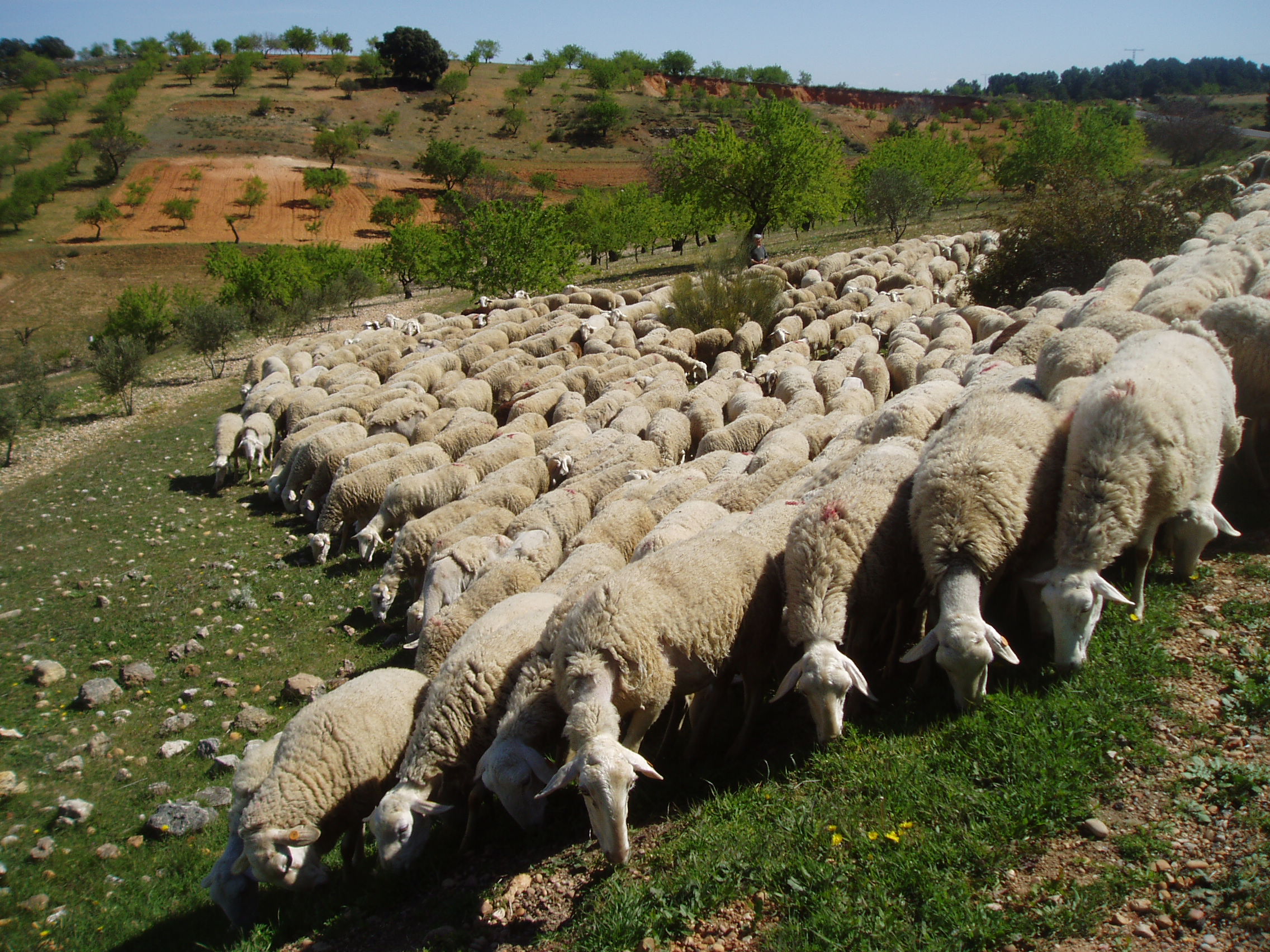
Sheep grazing in La Mancha, Spain. 
Manchago is a dairy delicacy that dates back to the early 17th century and is one of Spain's most popular cheeses. 

Raw milk Manchego is far more outstanding in taste but harder to find than pasteurized versions, even where it's made in Spain but especially in the United States where increased restrictions on importing raw milk cheeses have been put into place. Since Manchego is typically aged at least 60 days, it's one of the raw milk cheeses that's accepted as safe to import by the FDA. Still, raw milk cheeses are generally harder to make and require more attention to detail, so many cheese makers are turning to pasteurized milk. Fortunately, a few master cheese producers take the extra time to create Manchego made from raw milk. They and their clients will be happy to know that the extra effort is worth it when it comes to the more pronounced flavors that emerge in their products. 


rawmilk
Raw sheeps's milk contains folate, B12 and other nutrients.

Like many cheeses with a long history, there are strict rules about how and where Manchego is produced. In order to be classified as Manchego, the cheese must be made from whole milk that comes from the Manchega sheep. These sheep are raised and bred on registered farms in designated areas. Cheese makers must also entirely produce their product in the La Mancha region of Spain. This includes the provinces of Albacete, Ciudad Real, Cuenca and Toledo. The cheese must be aged a minimum of 60 days but not more than two years, and it must be pressed into cylindrical molds that are no more than 12 cm high and 22 cm in diameter. In the past, Manchego cheeses were wrapped in grass baskets, creating zig-zag lines on the aging rind, but these days those lines can be and often are made by machine. 

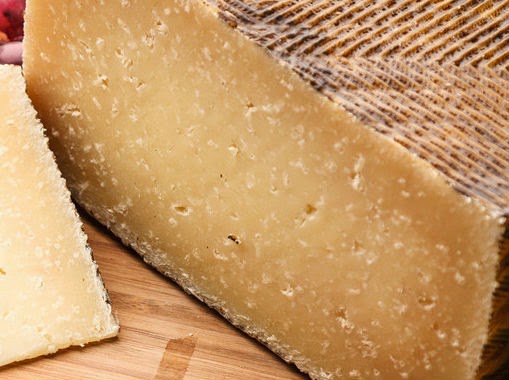
Inside the inedible wax rind, Manchego has a powerful aroma, but it's not like traditional stinky cheeses. The potent smell is sharp, but not offensive. If anything, it's inviting despite coming on strong. Think more an exuberant Trent Lane over Pepe Le Pew. It's intriguing but laid back and unassuming. This raw-milk version is aged one year, which allows the color of the interior to deepen to a light caramel color. On the outside, it looks a lot like many other Manchego cheeses, but don't let its common appearance fool you.


Raw milk manchego aged for a year has a beautiful caramel color.


Even if you are not a Manchego fan, be sure to try this one that's produced in the Cuenca region by Estanislao, a cheese maker whose family has been producing raw milk varieties for over half a century. While most Manchego cheeses are nice, this one stands out among the rest, mostly because the use of the raw milk enhances the flavors tremendously. 

When first tasting this beautiful cheese, be prepared, because your eyebrows might unexpectedly rise, and you might feel compelled to exclaim, "Ooooo!" out loud. Raw milk Manchego wakes up all your senses. 

While the flavor is very even and far from complex, it's also fruity, tangy, piquant and outrageously nutty with notes of mixed nuts roasted with brown butter. This cheese is dry, salty and very slightly acrid but oddly has an occasional sweet flavor that comes out of hiding. There's no doubt that this cheese packs a punch. It has a classic sheep's milk cheese taste that's not as pungent as goat's milk but stronger than cow's milk. If you let it linger in your mouth and concentrate, you will detect mild notes of hay and grass. Because it's not overly complex, it makes a great snacking cheese, even though both the flavor and aroma are strong. It has a high fat content which always seems like an odd paradox to me when it comes to harder cheeses. The oiliness doesn't come off as creaminess, though. It's more crumbly. 

Manchego is not a melting cheese, so it's not ideal as the main cheese on pizza, and it's a bit too dry and salty for a cheese sandwich. Keep in mind too that the flavors are more pronounced with this raw milk cheese, so mixing it with other cheeses will elevate the overall flavor of whatever you prepare. Serve raw milk Manchego with quince paste or fig jam and crackers. Try it with dates, olives, almonds or melons wrapped in pancetta. It even goes well with a salad served next to a lamb dish. 


Manchego on toasts with ham, fig jam and radish sprouts.

Liquor Mart
Liquor Mart in Boulder has an outstanding selection of wines, beer, champagne and more.


Kevin Downs, Assistant wine manager at Liquor Mart in Boulder, Colorado, suggests the following pairings for this cheese:


Raw Milk Manchego

Although people often think of red wine with cheese, white wine actually goes better with most cheeses, especially with soft or creamy varieties. However aged, firm cheeses often pair well with reds, and Manchego is a perfect example. The nutty, piquant flavor calls for a tannic, somewhat fruity red. Not surprisingly, since this is a cheese of Spanish origin, an ideal choice is Tempranillo. Tempranillo is the main grape found in Rioja and Ribera del Duero wines. These wines have red cherry fruit flavors with moderate tannins, and spice and vanilla from oak aging. There is also an earthiness to these wines that works well with the cheese. From Rioja, Valsacro Dioro 2005 is a spectacular choice, at $29.99, and if you want to spend less, Arnegui Crianza at $12.99 is basically a steal at this price. 

Ribera del Duoro is the other major region producing wines from this grape, and these tend to be bigger, more fruity wines. Vizcarra Senda del Oro is superb at $18.49. Other varietals that work here are Cabernet Sauvignon or Meritage wines from California that have the structure of Bordeaux but a bit more fruit. Marietta Cellars Arme, at $24.99 is an outstanding Meritage, as is My Essential Red, by Master Sommelier Richard Betts for the same price. Lyeth, at $14.99, is a good choice as well. For a Cabernet, try Wyatt or Rickshaw both under $15.00. 

If you are a white wine drinker, a nice Verdejo works well. This varietal produces fruity, minerally medium-bodied wines that work well with this cheese. Shaya, at $17.99, is outstanding, and for $10.99 both Naia and Basa are more than adequate. 

Finally, again sticking with a Spanish theme, an Oloroso sherry, with its caramel, baking spice and nutty flavor would be outrageous with this chese. Try Bodegas Dios Baco, at $24.99 Enjoy!


Oloroso sherry pairs well with raw milk manchego.